

Ontario Project
R2G2 MODEL — CROSS-BORDER APPLICATION & RESULTS
R2G2
Model Applied Cross-Border
Témiscamingue
Geological Setting
Multi-Phase
Tectonic Reactivation Confirmed
2026
Active Exploration Phase
Ontario: R2G2
Crosses the Provincial Boundary
QIMC's Ontario exploration position represents a natural extension of the R2G2 model's geographic reach.
The Témiscamingue geological province — where the R2G2 model was first developed and applied — straddles the Québec-Ontario border, and the same rift-associated, structurally reactivated geological architecture that defines QIMC’s Québec properties continues into Ontario’s portion of this ancient basin system.
This continuity is not coincidental. The R2G2 model was specifically designed to identify reactivated rift and graben systems, which are, by their geological nature, large-scale features that do not respect modern political boundaries. Ontario’s position within this framework was identified early in QIMC’s model-building process as an area of equivalent prospectivity to the Québec side of the same geological corridor.
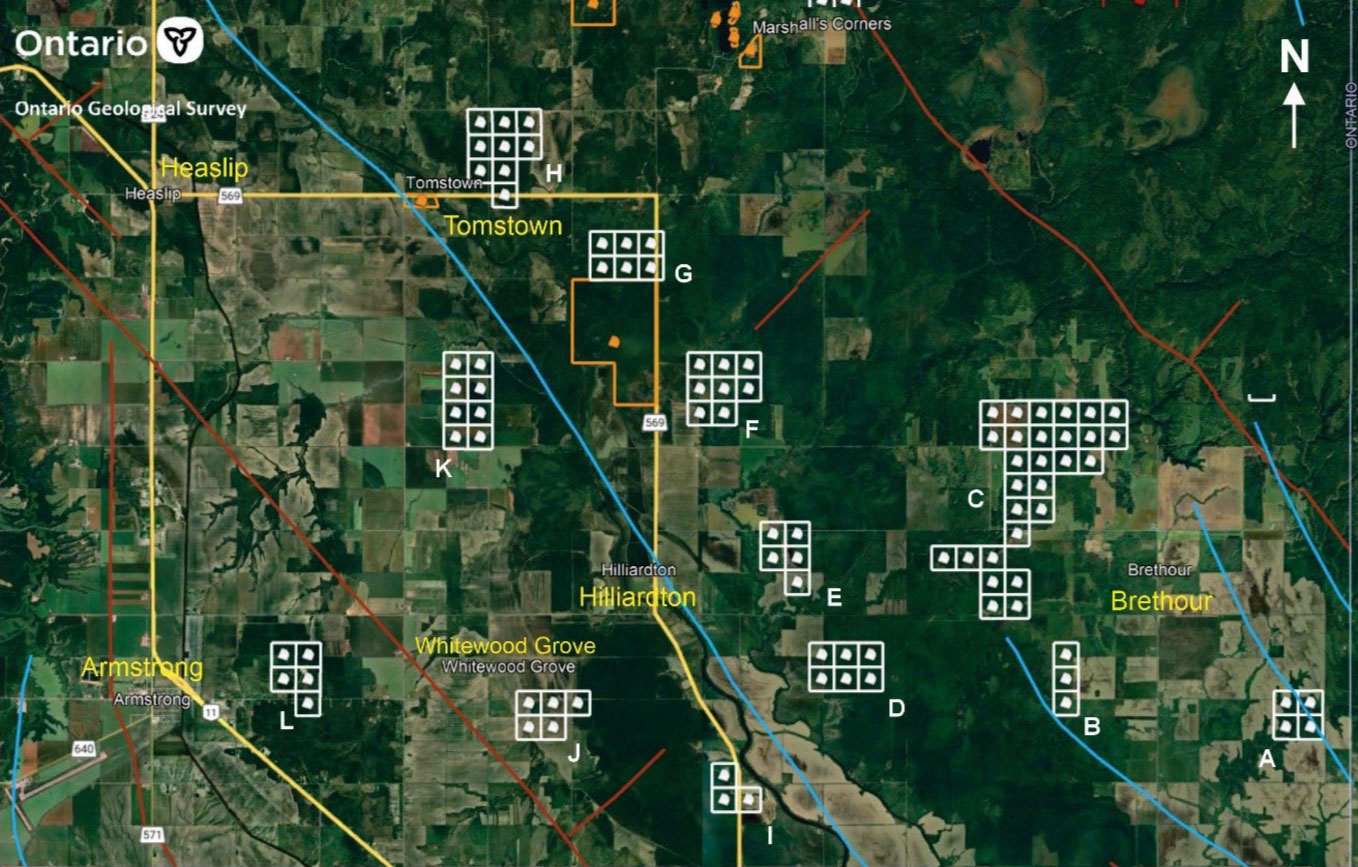
Click Image to Expand
Geological Basis
For Ontario Prospectivity
- The Témiscamingue Graben system is one of the most extensively reactivated rift structures in the Canadian Shield — a geological setting that Prof. Richer-Lafleche and the QIMC team identified as a primary R2G2 analogue from the outset of model development
- Iron-rich mafic and ultramafic rock packages of the same age and composition as those targeted in Québec are present within the Ontario portion of the rift system — the same lithology that drives hydrogen generation through serpentinization globally
- Structural mapping across the Ontario position identifies rift-margin fault systems with the fracture permeability and reactivation history required by the R2G2 model to support hydrogen migration and trap formation
- Elevated radon anomalies identified during early geochemical reconnaissance across the Ontario properties are consistent with the deep crustal fracture pathways the R2G2 model predicts as hydrogen conduits
How the R2G2 Model
Was Applied in Ontario
QIMC applied the full R2G2 targeting workflow to its Ontario properties, including:
Structural Interpretation:

Compilation and re-interpretation of regional geological surveys to identify rift-margin fault segments with polyphase reactivation history — the primary R2G2 targeting criterion
Geochemical Reconnaissance:
Systematic soil-gas hydrogen and radon surveys to detect surface expression of deep-seated hydrogen migration along structurally controlled pathways
Geophysical Analysis:
Review of regional magnetic and gravity data to identify subsurface mafic rock packages and graben geometries consistent with the R2G2 model’s generation and trap criteria
Results & Significance
-
1
Ontario exploration confirms
the R2G2 model's applicability beyond its initial Québec development context — validating the framework as a genuinely regional exploration tool
-
2
The same geological logic
that guided QIMC's targeting in Québec and Ontario, and was subsequently applied to generate a confirmed hydrogen discovery in Nova Scotia, underpins the Ontario exploration position
-
3
INRS's March 2026 independent validation of the R2G2 model
— triggered by the Nova Scotia DDH-26-01 results — strengthens the scientific basis for QIMC's Ontario position by confirming that the model's predictions are geologically sound and reproducible
-
4
Ontario remains an active component
of QIMC's multi-province natural hydrogen portfolio, with continued work planned as resources and results from the Nova Scotia drilling programme are integrated into the broader geological model
From a geological model to field-proven results — the R2G2 framework continues to demonstrate its power as a repeatable, science-first exploration tool.”
John Karagiannidis — President & CEO, Québec Innovative Materials Corp.